Skip to content

Thursday, September 24, 2026

  • NYSE 12:05 Open
  • LSE 17:05 Closed
  • Xetra 18:05 Closed
  • HKEX 00:05 Closed
  • TSE 01:05 Closed
DigestEconomics
  • World news
  • Business
  • Stock
  • Politics
  • Sport
Get the daily brief
DigestEconomics
  • World news
  • Business
  • Stock
  • Politics
  • Sport
Subscribe
DigestEconomics
  • World news
  • Business
  • Stock
  • Politics
  • Sport

What moved overnight and why it matters, in your inbox before the opening bell.

Get the daily brief
Politics

The US right still paints Muslims as the ‘enemy’. But they are fighting for a brighter future for Americans | Nesrine Malik

September 15, 2026 3 min read

Two and a half decades after the trauma of September 11, New York City finds itself caught between two conflicting eras. On one hand, there is the rise of Habibi City, a vibrant cultural shift led by a generation from South West Asia and North Africa that is finally claiming its space in the American consciousness. These individuals are no longer relegated to the sidelines of bodega shops and halal carts; instead, they are becoming fixtures of Saturday Night Live, high end dining, and influential political circles. Figures like Zohran Mamdani embody this emergence, representing a cohort that balances deep loyalty to their local neighborhoods with an unwavering concern for global struggles in places like Gaza.

Yet, this ascent comes alongside a stubborn and deepening vein of prejudice. While Muslim Americans accumulate more social clout, Pew research indicates that public attitudes toward Islam have grown significantly more negative and partisan since 2002. The tragedy of this paradox is evident when leaders like Mamdani are viewed not as citizens or representatives, but as proxies for the terrorists of twenty years ago. From accusations by senators calling candidates terrorists to claims that any Muslim in public office is a threat to national security, the rhetoric from the American right continues to paint an entire community as the enemy.

This friction stems largely from a clash of perspectives on what it means to be American. A new generation of immigrants has developed a form of political cosmopolitanism that rejects blind faith in American exceptionalism. Having witnessed the catastrophic fallout of the war on terror and unconditional support for Israel, these leaders offer a critique born from lived experience rather than mere ideology. For many, growing up under the shadow of Islamophobia did not lead to quiet assimilation but instead forged a sharp political identity that refuses to stay silent in the face of injustice.

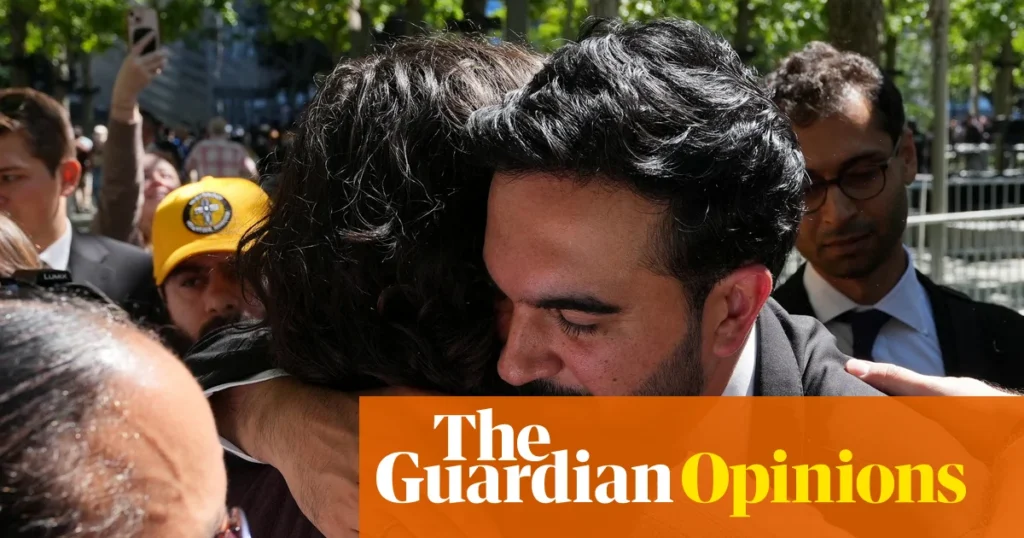
Ultimately, this movement represents something larger than just religious or ethnic representation; it is a cornerstone of a broader progressive push within the United States. By rooting their politics in material concerns regarding standards of living and challenging failed foreign policies, these figures are building coalitions with others who feel abandoned by the political establishment. When Mamdani recently shared a sobering handshake with Rudy Giuliani at a 9/11 memorial service despite previous calls for his exclusion, it served as a poignant visual metaphor for the current moment: one man embodying an era defined by division and fear, and another signaling a future built on resilience and inclusion.
Share
Previous story Rise in abuse of election candidates is ‘changing politics’ in England Next story Trump’s Secret Points System for Cabinet Members

More from this desk

Politics

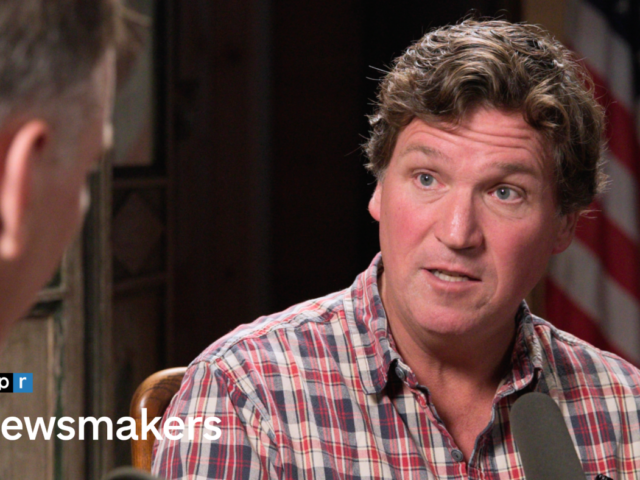
Tucker Carlson has a new enemy: the politics he helped build

September 24, 2026
Politics

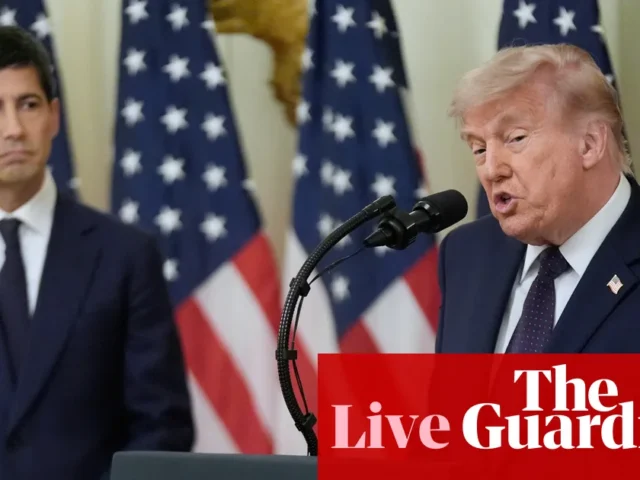
Trump blasts interest rate uptick and claims US is doing so well that rates ‘should be 1%, or less’ – live

September 17, 2026
Politics

7 Republicans rebel against Trump, vote with Dems to rein in Iran war powers

September 16, 2026

The daily brief

Markets, policy and technology — one short email each weekday morning.

Systems and Technologies LLC 1607 Capitol Ave, Cheyenne, WY 82001, USA

What patience paid

Put money into the S&P 500 at the start of a decade and leave it alone. This is what it became.

Amount invested
1920s 2010s
Worth today $256,742 25.7× over 36 years $98,853 in today’s money, after inflation

Decade-average price returns, before dividends and fees. Past performance does not guarantee future results.

Latest headlines

  1. 10:15 am Tucker Carlson has a new enemy: the politics he helped build
  2. 10:15 am Jacoby Brissett: No one has lost confidence in Marvin Harrison Jr.
  3. 10:15 am China’s 80% Grip on Iranian Oil Looms Over Trump-Xi Summit
  4. 10:15 am These 5 Stocks Are Earning Massive EPS Upgrades. Here’s Why.
  5. 10:15 am More than 167,000 pounds of meat recalled nationwide

Desks

  • Politics 42
  • Stock 24
  • World news 24
  • Sport 24
  • Business 23

The brief, before the open

What moved overnight and what it means for the session ahead. One email, every weekday, in your inbox before the bell.

  • Three minutes to read, start to finish
  • Indices, FX, rates and crypto in one glance
  • US, Europe and Asia in every issue

Get tomorrow’s brief

Free. Unsubscribe with one click.

Systems and Technologies LLC 1607 Capitol Ave, Cheyenne, WY 82001, USA
DigestEconomics

Markets, policy and the money behind both.

Independent reporting on what moves capital, published every weekday. The brief lands before the opening bell.

Get the daily brief

Desks

  • Politics
  • Stock
  • World news
  • Sport
  • Business

The site

Terms and conditionsPrivacy Policy

© 2026 digesteconomics.com. All rights reserved.

Market figures are for information only and are not investment advice.

Get the brief in your inbox

Market-moving news and analysis, delivered every weekday before the opening bell.

Systems and Technologies LLC 1607 Capitol Ave, Cheyenne, WY 82001, USA