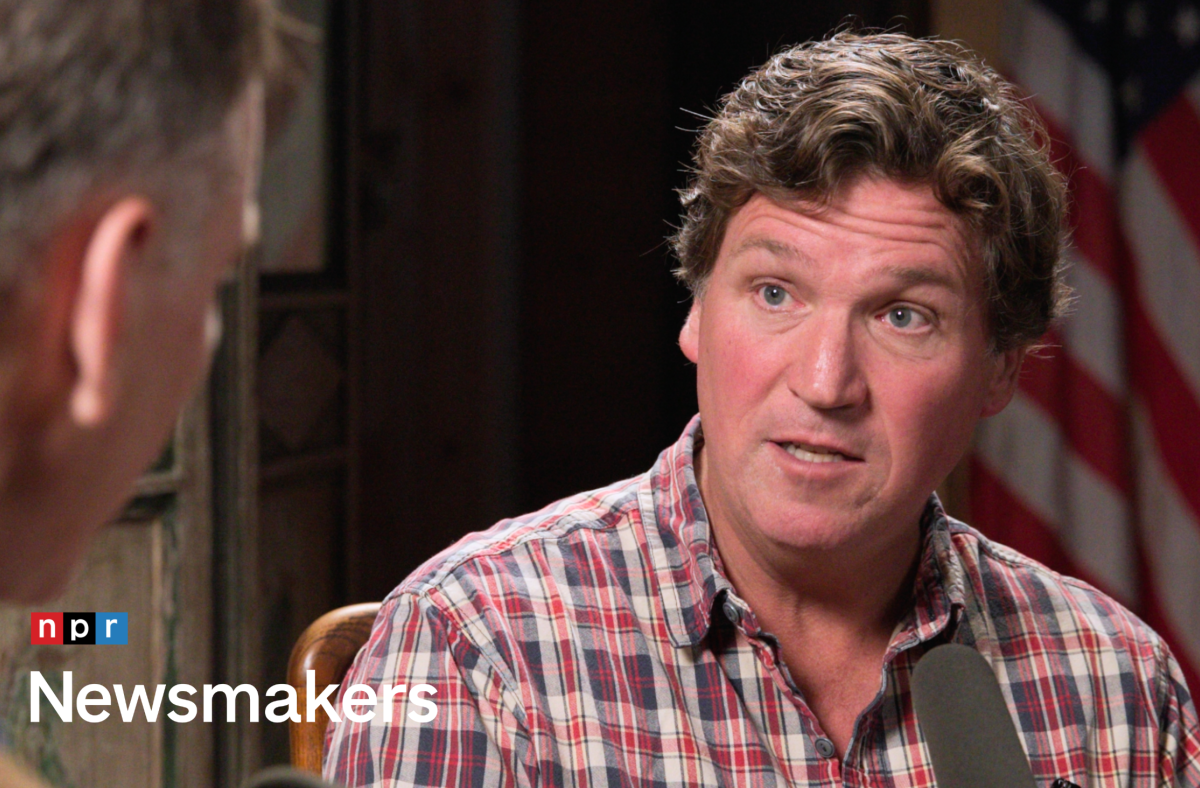
For years, Tucker Carlson acted as one of the most influential architects of the modern MAGA movement, providing the nightly intellectual scaffolding for Donald Trump’s populist surge. But in a startling reversal captured in a recent interview with NPR, the former Fox News star has turned his gaze toward the very man he once championed. Now operating as an independent internet personality from a room filled with historical curiosities and antique weaponry, Carlson is openly calling for Trump’s removal from office, citing a profound disagreement over the administration’s approach to the war in Iran.
The rift appears rooted in what Carlson views as a loss of presidential agency. Rather than seeing Trump as the decisive leader he previously portrayed, Carlson now suggests that Trump lacked the latitude to make decisions on his own regarding Iran, alleging that outside influences—which he labels as a shadowy uniparty controlling both political factions—effectively forced the president’s hand. During their discussions, Carlson claims Trump dismissed concerns about the conflict with a nihilistic shrug, telling him that everyone would eventually die anyway. The White House responded to these assertions not with a formal denial, but through typical Trumpian fashion via social media, labeling Carlson among those stupid people who wish to see Iran obtain nuclear weapons.
This ideological pivot coincides with a broader period of reflection for Carlson, who expressed regret over his tenure as a cable news firebrand. He admitted to focusing on the wrong cultural grievances for decades while ignoring systemic economic failures like a tax code rigged against workers. While he hinted at interest in a third party movement, he stopped short of claiming leadership over such an endeavor. Instead, he seems content to play the role of an eccentric contrarian, defending controversial figures and suggesting that certain foreign payouts might be acceptable if they ended conflicts abroad.
Ultimately, Carlson finds himself in an uncomfortable position: fighting against a political machine he spent nearly a decade helping to fuel. Whether this shift represents a genuine moral awakening or a strategic rebranding remains unclear, but it underscores the volatile nature of today’s right-wing coalition. Despite the bridge burning behind him, Carlson continues to demonstrate his singular ability to dominate the news cycle, proving that regardless of whose side he is on, he knows exactly how to keep eyes glued to his screen.